https://richardrodgers.bluemusicgroup.com
 Northern Sunrise
 Live Jazz on Broadway
 Two for the Road
 Live at Hubbard Hall
 At the Vanguard
 Portraits Explorations
 The Poll Winners Vol 1
 Easy Like Music to Listen to
 The Art of Tatum Vol 2
 In Hollywood
 Oscar Peterson Plays & Sings
 Live Sessions 1953
 Funky Blues
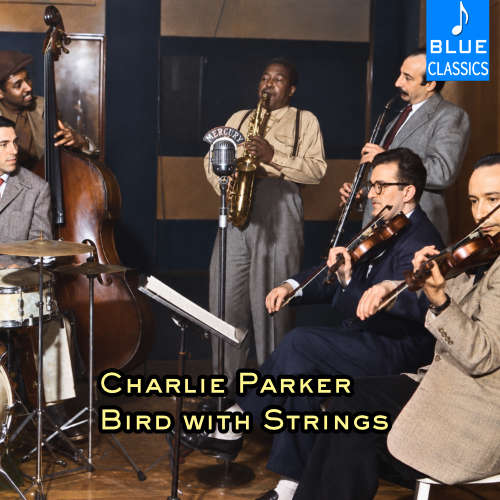 Bird with Strings
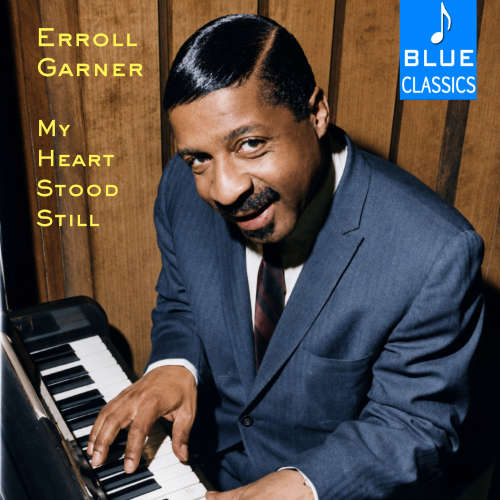 My Heart Stood Still
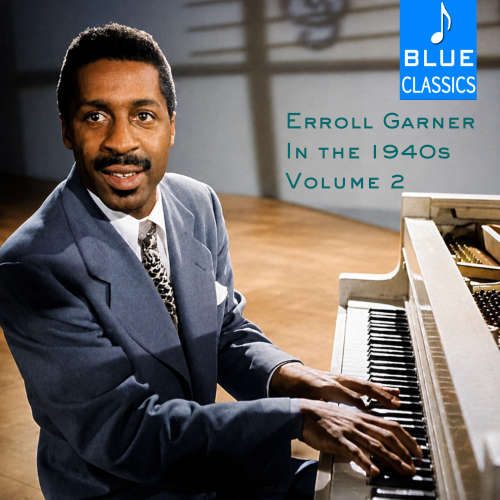 Erroll Garner in the 1940s Vol 2
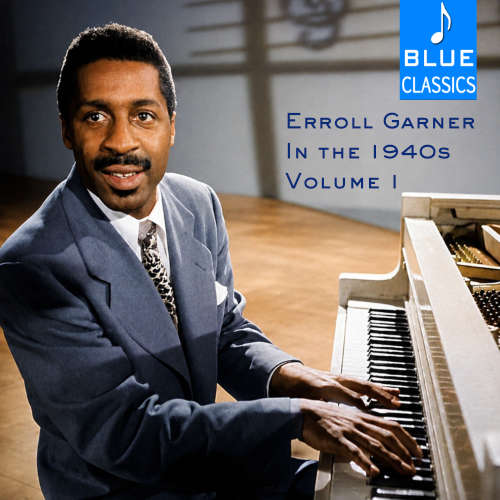 Erroll Garner in the 1940s Vol 1
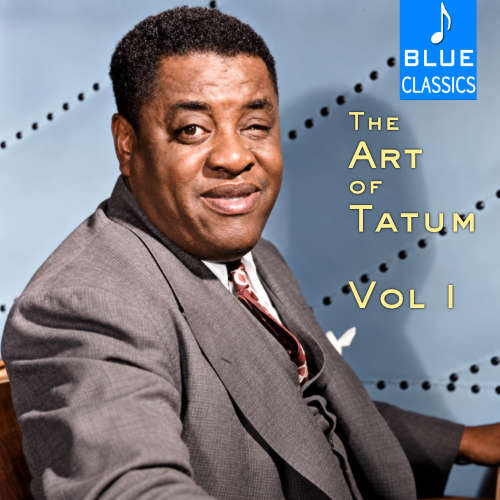 The Art of Tatum Vol 1

Richard Rodgers - composer
Richard Rodgers (b. June 28, 1902 – d. December 30, 1979) was one of the central figures in twentieth-century American musical theatre. Over a career spanning more than six decades, he wrote more than 900 published songs and the scores for forty Broadway musicals. His career was shaped by two major writing partnerships: first with Lorenz Hart, and later with Oscar Hammerstein II. After Hammerstein's death in 1960, Rodgers continued writing for the stage, at times supplying both music and lyrics himself.Born in New York City on June 28, 1902, Rodgers grew up in a family where music was part of everyday life. He began writing songs while still young and attended Columbia University, where he met Lorenz Hart. Rodgers and Hart's professional collaboration began with songs for amateur and university productions. Their first professional Broadway song was “Any Old Place with You,” included in A Lonely Romeo in 1919.
Their breakthrough came with The Garrick Gaieties in 1925, a charity revue for which they supplied the score. The show introduced “Manhattan,” one of their enduring songs, and established Rodgers and Hart as a successful songwriting team. During the following years they became increasingly prolific, writing for Broadway and, for a period, London and Hollywood. The Rodgers & Hammerstein Organization describes their partnership as lasting from 1919 to 1943 and encompassing about forty shows and film scores.
Rodgers and Hart worked within the tradition of the American musical comedy, but their scores increasingly combined sophisticated harmonic writing with lyrics that were witty, conversational and sometimes deliberately unconventional. Their catalogue from the late 1920s and 1930s includes On Your Toes, Babes in Arms, I Married an Angel, The Boys from Syracuse, Too Many Girls, Higher and Higher, Pal Joey and By Jupiter. Their songs from this period include “My Funny Valentine,” “The Lady Is a Tramp,” “Spring Is Here,” “This Can't Be Love,” “Bewitched,” “I Could Write a Book,” and “Where or When.”
A particularly important part of Rodgers and Hart's development was their willingness to work within different theatrical forms. On Your Toes incorporated ballet into a musical-comedy setting; Babes in Arms combined musical comedy with a story about young performers; and The Boys from Syracuse, based on Shakespeare's The Comedy of Errors, demonstrated that their musical language could adapt to literary source material. Their work for Hollywood included the 1932 film Love Me Tonight, starring Maurice Chevalier.
By the late 1930s Rodgers and Hart had become one of Broadway's established songwriting partnerships. Yet Rodgers increasingly wanted to pursue a different type of musical theatre, one in which songs would emerge more organically from character and dramatic situation. At the same time, Oscar Hammerstein II had spent years working to modernize operetta and had already collaborated with composers including Rudolf Friml, Sigmund Romberg, Vincent Youmans and Jerome Kern. Hammerstein's work with Kern on Show Boat had been particularly important in the development of the American musical.
Rodgers and Hart's partnership effectively came to an end in 1943, when Rodgers began collaborating with Hammerstein on Oklahoma!. There was, however, a brief reunion with Hart. They revised the earlier musical A Connecticut Yankee, adding six new songs. The revised production opened on November 17, 1943, only days before Hart's death on November 22.
The collaboration with Hammerstein represented a major change in Rodgers's career. Oklahoma! integrated songs, dances and dramatic action into a unified theatrical structure, a form that became known as the musical play. The Rodgers & Hammerstein partnership subsequently produced Carousel, Allegro, South Pacific, The King and I, Me and Juliet, Pipe Dream, Flower Drum Song and The Sound of Music. They also wrote the film musical State Fair and the television musical Cinderella.
The distinction between the Rodgers–Hart and Rodgers–Hammerstein periods is not simply a difference in lyricist. The two partnerships served different theatrical purposes. Rodgers and Hart's musicals were rooted in the musical comedy tradition, with an emphasis on verbal wit, sophisticated romantic songs and a variety of comic and theatrical situations. Rodgers and Hammerstein increasingly constructed musicals in which the songs were integrated into the narrative and character development. This became particularly apparent in Carousel and South Pacific.
Rodgers's music remained central to both partnerships. His melodies could be immediately singable while employing harmonic progressions more complex than those commonly associated with commercial popular song. His musical vocabulary also remained closely connected to the rhythm and structure of American song, allowing his work to function both theatrically and independently from the stage productions for which it had been written.
The Rodgers–Hammerstein partnership lasted until Oscar Hammerstein II's death on August 23, 1960. Their final musical was The Sound of Music, which opened in 1959. Hammerstein's final lyric was “Edelweiss.”
Rodgers did not retire after Hammerstein's death. Instead, he entered a fundamentally different phase of his career. For the first time on Broadway, he became not only the composer but also, on a number of projects, his own lyricist. His first post-Hammerstein musical was No Strings, which opened in 1962. Rodgers wrote both music and lyrics for the show, and the score earned him the Tony Award for Best Composer.
No Strings was followed by a series of further collaborations. Rodgers worked with Stephen Sondheim on Do I Hear a Waltz?, with a book by Arthur Laurents, and subsequently collaborated with Sheldon Harnick on Rex and with Martin Charnin on Two by Two. He also wrote the music for I Remember Mama, his final Broadway musical. The Rodgers & Hammerstein Organization identifies I Remember Mama as his fortieth and final Broadway musical, opening less than eight months before his death in 1979.
The post-Hammerstein period therefore presents a different side of Rodgers. His work with Hart had shown him working within sophisticated musical comedy; his years with Hammerstein had established a new model of integrated musical theatre; and his later career required him to adapt to different lyricists, different theatrical forms and, in the case of No Strings, the task of writing words as well as music himself.
Rodgers's own lyrics for No Strings are especially significant because they demonstrate that his abilities were not limited to melody. He had spent decades collaborating with two highly individual lyricists, and that experience gave him an intimate understanding of the relationship between words, rhythm and musical phrase. His decision to write his own lyrics late in his career therefore represented an extension of his work rather than a complete departure from it.
Rodgers remained active as a composer and figure in American theatre throughout the 1960s and 1970s. His later work did not reproduce the circumstances of the Rodgers–Hart or Rodgers–Hammerstein years, but it continued his interest in writing theatre music that could accommodate character, dramatic action and song.
His professional achievements were substantial. His work with Hammerstein earned numerous Tony, Academy Award, Pulitzer, Grammy and Emmy awards, while his broader career established him as one of the most widely performed American composers of the twentieth century. Rodgers also became one of the few artists to receive recognition across several major American entertainment fields.
Richard Rodgers died in New York City on December 30, 1979, aged 77. He left a body of work that spans the development of the American musical from the musical comedies of the 1920s and 1930s through the integrated musical plays of the 1940s and 1950s and into the more diverse Broadway of the 1960s and 1970s.
His career is particularly notable for the way it changed with each major partnership. With Lorenz Hart, Rodgers helped shape the sophisticated American musical comedy and produced a large repertoire of songs that moved beyond the theatre to become jazz and popular standards. With Oscar Hammerstein II, he participated in a transformation of Broadway musical theatre, in which songs became more closely connected to dramatic structure and character. After Hammerstein's death, Rodgers demonstrated that he could continue working in a changing theatrical environment, writing with new collaborators and, in No Strings, taking on the role of lyricist as well as composer.
The result is a catalogue that connects several generations of American musical theatre. Rodgers's melodies continued to be performed independently of their original productions, while the musicals themselves remain part of the history of Broadway. His work with Hart, Hammerstein and his later collaborators represents not three separate careers, but successive phases in the long working life of a composer who continued to adapt his musical voice to changing forms of theatre.